01.DIGITAL TWIN

EdgeSight Digital Twin

Monash VISTA is building the perception system behind a living digital twin (DT). We are working with RGB cameras, LiDAR and radar running on edge computing hardware, and combining them with modern computer vision. Cameras give the scene meaning: we are working towards training and deploying AI models that segment spaces and detect objects and people. LiDAR gives it precise geometry, with millions of 3D points that map every surface to the centimetre, even in the dark. Radar adds motion: it measures how fast things move and keeps working through rain, fog and smoke, without capturing anyone’s image.

Our current challenge is bringing these streams together on a single platform so the DT understands what is in a space, exactly where it is, and how it is moving.

Later we plan on adding live IoT data such as temperature or water levels. Stacked together, these layers turn a static 3D model into one that reflects the real world as it happens. This project gives our members hands-on experience across the full stack, from embedded hardware and software to edge AI and 3D visualisation, using open-source tools and building custom software of your own.

If you want to learn computer vision, robotics-grade sensing and digital twins by building something real, join the Monash VISTA team in the Smart Infrastructure Lab at Monash Innovation Labs.
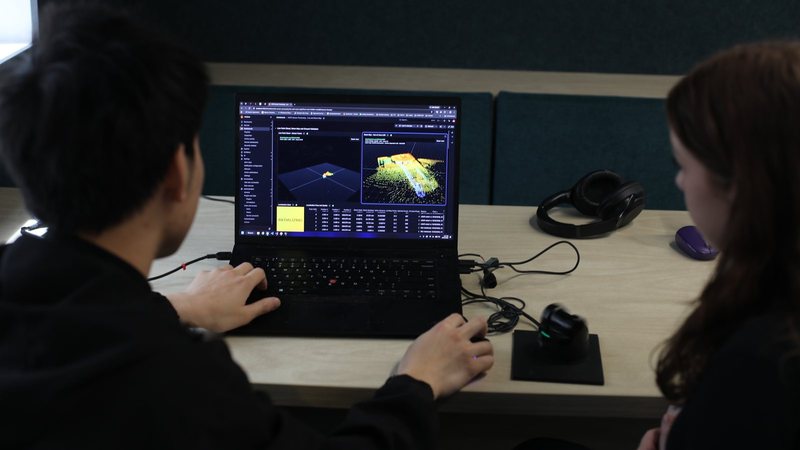
LiDAR point cloud · MSI Lab
Two team members reviewing a live LiDAR point cloud on a laptop
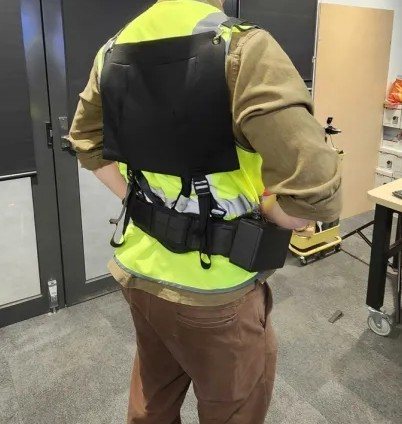
Exoskeleton prototype · MSI Lab
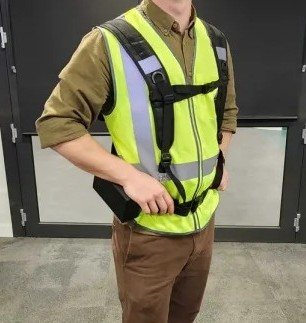
Front view of a team member wearing the posture-correction exoskeleton vest
Back view of the exoskeleton, showing the back panel and waist-mounted electronics
02.SMART HEALTH CARE

Vision-based Exoskeleton for Posture Correction

Poor back posture is a leading cause of workplace injury, yet most posture wearables rely on body-worn sensors. This system takes an alternative approach. Two cameras track the spine without contact, and a lightweight harness gives wearers haptic cues when their posture drifts from their neutral reference. An AI model recognises whether its wearer is standing, sitting or lifting, adapting its feedback accordingly. Built as the Monash VISTA executive team’s final-year project, the working prototype is now ready for future members to refine.

03.ASSISTIVE AI

Interactive Capybara

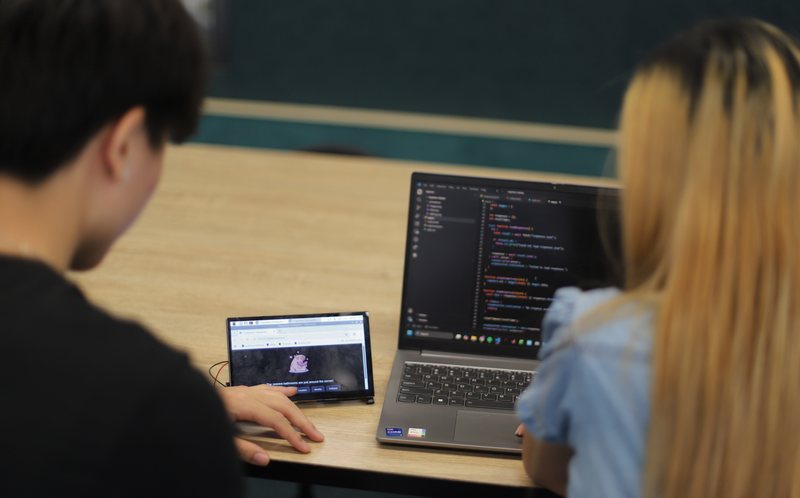
The Interactive AI Capybara project focuses on developing an AI-powered virtual assistant that makes human-AI interaction more engaging and accessible. Featuring Stella the Capybara, the system combines large language models with holographic display technology to create an interactive character that users can chat with through natural language, answering questions, providing directions and introducing visitors to projects at the Monash Smart Infrastructure Lab. The aim is to explore how personality-driven AI and holographic interfaces can support more natural and engaging interactions in universities, exhibitions and other public spaces.

Interactive Capybara · MSI Lab
Two team members coding the Interactive Capybara, with Stella shown on a small screen beside the laptop
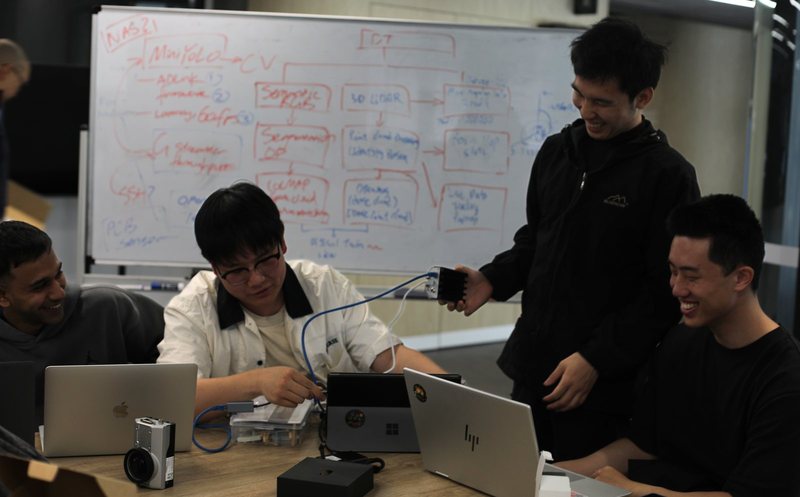
The EAII Team · MSI Lab
Team members testing the modular platform hardware in front of a whiteboard system diagram
04.COMPUTER VISION

Edgesight AI inferencing (EAII)

EAII seeks to develop and streamline computer vision focused IoTs operating on the edge. The current project is focused on development of cameras equipped with multimodal AI systems such as object detection models and SLMs to generate semantic data. The long term goal is to engineer customisable, user-friendly devices that are safe, efficient and deployable.

Interested in working with us on a project?